
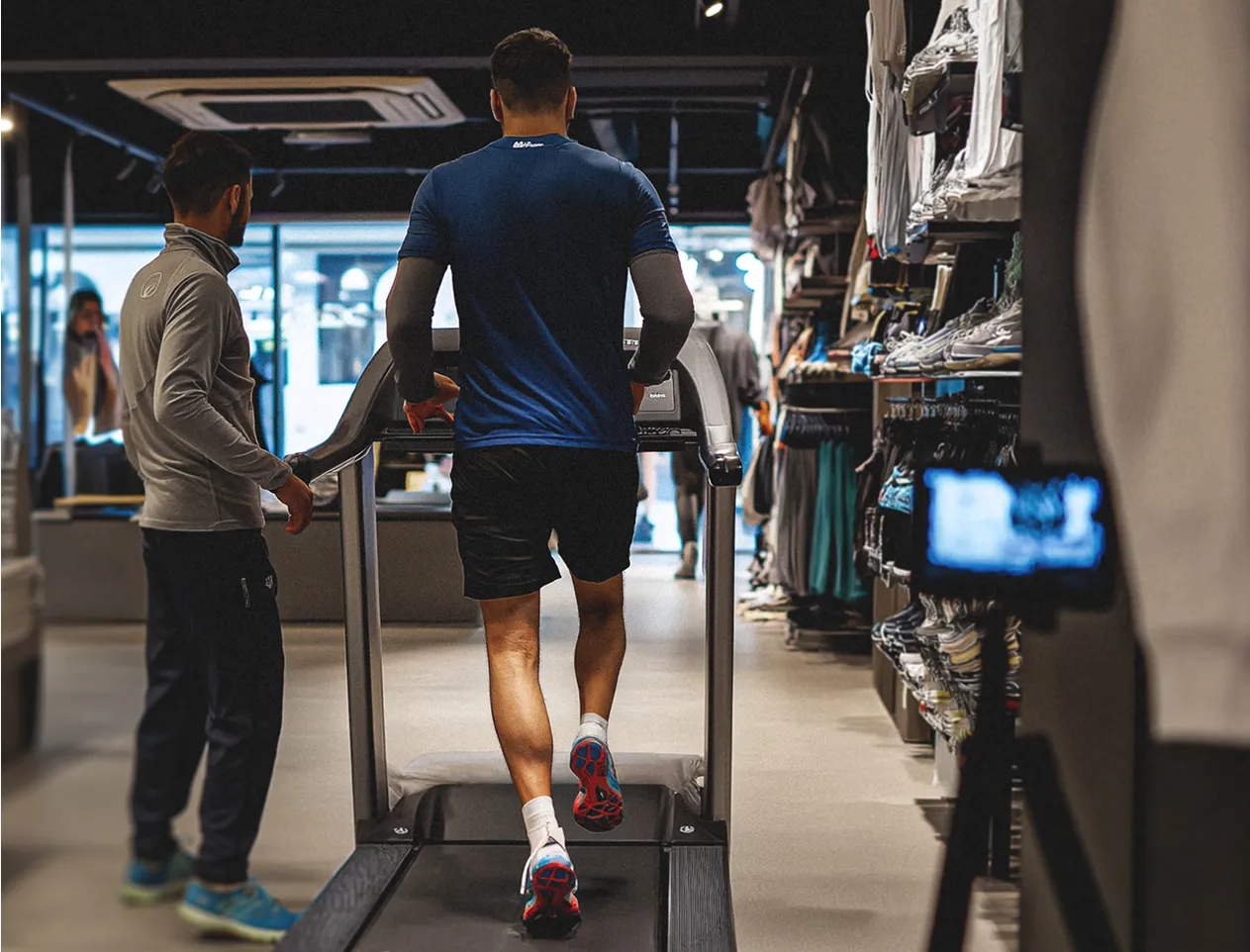
Charging for gait analysis does not have to mean putting a toll gate in front of a shoe fitting. For many running stores, the most balanced model is a modest fee that is fully credited when the customer buys shoes, plus a paid tier for runners who want a report or follow-up.
That approach puts a value on your team's expertise, reduces the cost of customers taking your advice elsewhere and keeps the fitting effectively free for genuine shoe buyers. The right price still depends on your service, staff time and local market.
The timing matters. A Running Industry Association analysis of point-of-sale data from 80 specialty stores found that footwear units fell about 5% in the first half of 2026, while average selling price rose roughly 3%. A service can add value to each visit, but only if the price and experience work for the customer as well as the store.
Key takeaways
- Start with a clearly advertised fee that becomes credit against a shoe purchase.
- Keep free analysis if it already converts well and takes little staff time.
- Add a paid tier only when the customer receives something useful to see, keep or compare later.
- Model analysis revenue separately from shoe margin so the business case stays honest.
What running stores charge for gait analysis
The examples below use a similar model: standard analysis is free with a shoe purchase but carries a fee when no shoes are bought. Higher-priced tiers add longer sessions, more measurements, a report or follow-up.
The prices below were checked on the stores' own pages on 28 October 2026. They are examples of current practice, not Ochy price recommendations.
Runners Need
Standalone price: £15 without a shoe purchase
With shoes: Free. Otherwise, the customer receives a £15 voucher valid against one pair for 30 days.
RunX
Standalone price: €25, or €30 in Groningen
With shoes: Free with new running shoes. Separate lab packages cost €69.99, with an advanced package at €129.99.
This comparison does not reveal which store has the most profitable model. It does show that charging and customer-friendly service are not opposites. Each store makes the value exchange clear before the session starts.
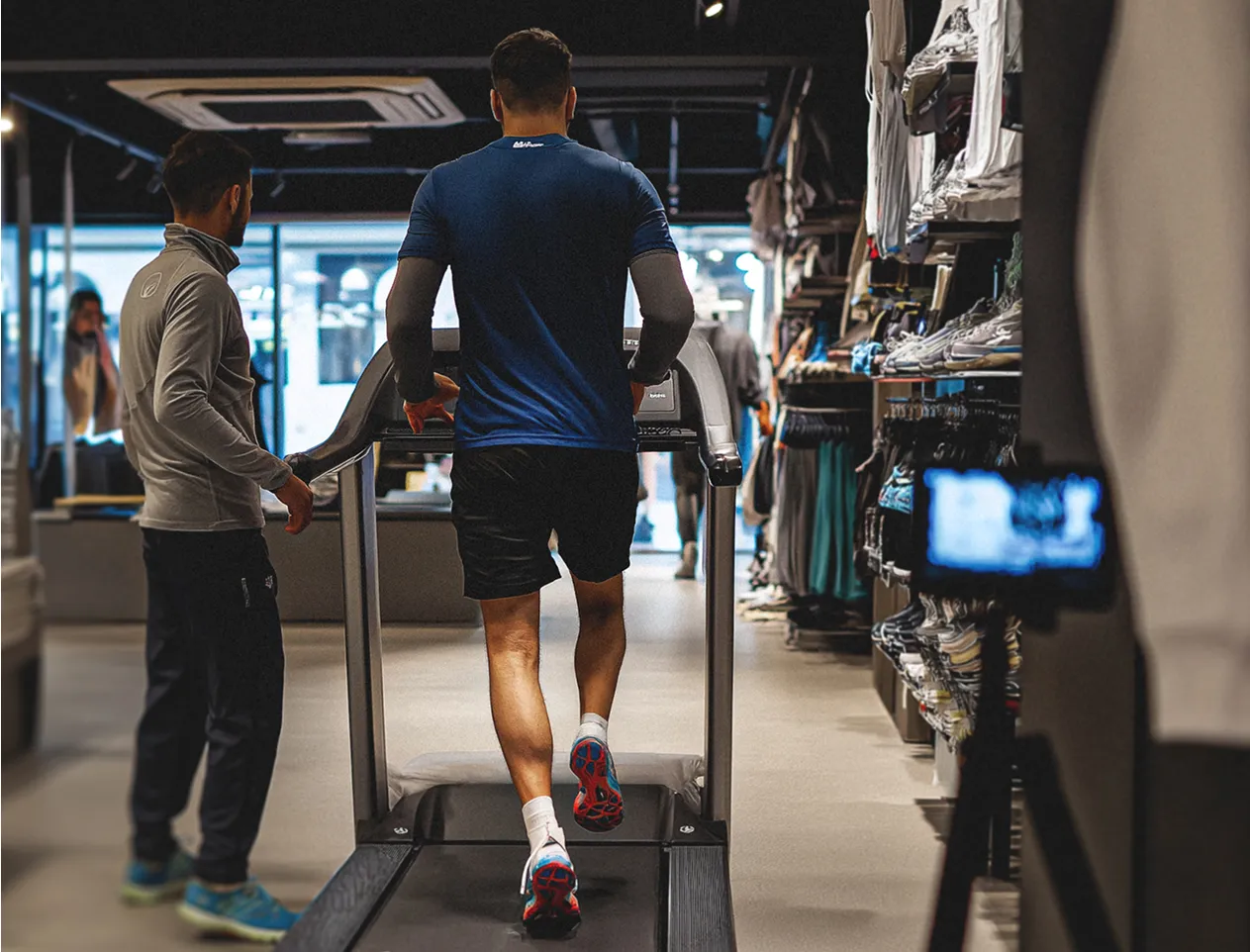
Four pricing models and when each one works
There is no universal best price. Choose the model that matches the job your analysis does in your store.
1. Free analysis
Free analysis has the lowest barrier and makes sense when it is a short part of every fitting. It can help a hesitant customer engage with your team and try the recommended shoes.
The trade-off is showrooming. If the session takes 30 minutes and the customer leaves with the recommendation, your store carries all the staff cost while another seller can win the order. Free also makes it harder to sell a deeper service later unless the difference is obvious.
Best fit: stores with fast analysis, strong shoe conversion and enough capacity at busy times.
2. A refundable or credited fee
A purchase-linked credit is the safest starting point for stores that want to charge for gait analysis. The customer pays for the appointment, then receives the same amount off their shoes. Buyers feel no extra cost, while a customer who leaves with the advice has still paid for the service.
Keep the rules simple. State the amount, eligible products and expiry date before the analysis. A long list of exclusions will make a fair policy feel punitive.
Best fit: stores losing staff time to no-purchase sessions but unwilling to add a cost for shoe buyers.
3. A voucher for a later purchase
A voucher gives the runner time to decide and creates a reason to return. Runners Need, for example, gives customers 30 days to use its £15 voucher against one pair of running shoes.
The operational risk is forgetting the follow-up. Record the voucher in your customer system, send one useful reminder and make redemption easy in store. Treat the voucher as a customer promise and an accounting liability until it expires or is used.
Best fit: stores whose customers often need time to compare models, speak to a coach or wait for payday.
4. Paid tiers
Paid tiers separate a quick fitting tool from a fuller service. A basic analysis can stay free or purchase-linked, while a paid option adds a more detailed explanation, a report to keep, a follow-up analysis or a longer consultation.
RunX illustrates the range: its standard analysis is free with shoes, while its published lab packages start at €69.99 and rise to €129.99 for the advanced service. The higher price is tied to a different deliverable, not simply the same fitting with a new label.
Best fit: stores with trained staff, clear deliverables and customers who want more than a shoe decision.
The maths: a worked monthly example
Calculate the retained analysis fees first, then add shoe gross margin in a separate model. Mixing the two can make a pricing idea look stronger than it is.
Consider a store with these illustrative assumptions:
- 10 analyses per day
- €15 charged at booking
- 60% of customers buy shoes and receive the full €15 credit
- 26 trading days per month
- Shoe revenue, margin, tax, cancellations and the cost of the analysis system are excluded
| Calculation | Formula | Result |
|---|---|---|
| Monthly analyses | 10 × 26 | 260 |
| Fees collected | 260 × €15 | €3,900 |
| Credits used by shoe buyers | 260 × 60% × €15 | €2,340 |
| Analysis fees retained | 260 × 40% × €15 | €1,560 |
The €1,560 is an illustration, not a revenue promise. If 80% buy shoes, retained analysis fees fall to €780. If only 40% buy, they rise to €2,340, but that lower shoe conversion may be a worse result for the business.
Now add staff time. At 10 sessions a day, a 30-minute process requires five staff hours. A five-minute process requires 50 minutes. This does not mean every store should shorten its service to five minutes. It means the price has to reflect the actual workflow, and the workflow may matter more than the fee.
Use your own figures:
retained monthly fees = analyses per day × trading days × fee × (1 - purchase rate)
Then compare the result with staff cost, software cost, voucher redemption, shoe margin and any change in conversion. Review the model after four weeks rather than treating your first assumptions as facts.
What makes customers happy to pay
Customers are more likely to accept a fee when the analysis produces a clear service, not a disguised sales charge. They should understand what they will receive before stepping onto the treadmill.
Five elements make the difference:
- Speed: respect the appointment time and remove avoidable waiting.
- Visible evidence: show the runner what you see instead of asking them to trust a conclusion.
- Relevant choice: connect the findings to shoes that are genuinely available on your shelves.
- Something to keep: provide a report or accessible result they can revisit.
- A reason to return: offer a follow-up that compares progress rather than repeating the same first visit.
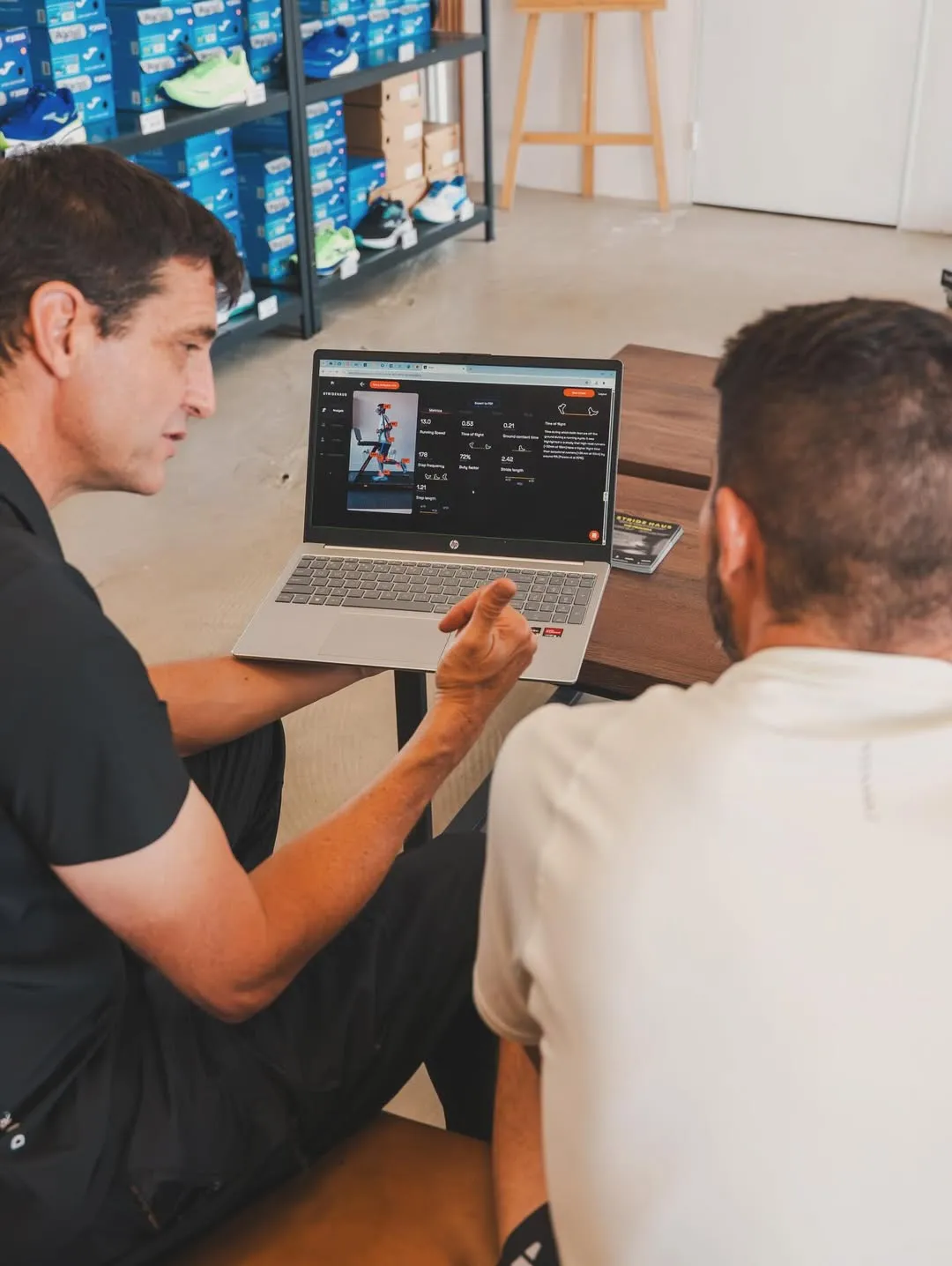
This also changes the customer conversation. A recommendation linked to visible movement data is easier to explain than a list of shoe features. A saved result creates a natural follow-up, as described in our guide to turning a walk-in into a loyal client.
How Ochy fits a paid gait analysis
Ochy is designed to make an in-store analysis quick, visible and repeatable. Its retailer workflow uses a smartphone to analyse movement and symmetry, then matches the result with eight footwear parameters and the shoe models available in your store.
On the Ochy for retailers page, stores using Ochy report:
- An average end-to-end customer experience of about five minutes
- An average of 38 analyses per store per day
- Typical customer charges of €10 to €15, with an incentive to buy
- Up to 50% growth in annual shoe sales
These figures describe Ochy's current retailer experience and customer reports. They are not a forecast for every store. Your location, offer, staff and measurement method will affect the result.
The service can also support a paid tier because the runner gets objective results on screen, a recommendation matched to current stock and a result that can support a later comparison. You can see the wider workflow in how retailers use AI-powered gait analysis, and how one national retailer introduced it in the Runners Need and Ochy partnership.
Thomas Carter, Store Co-Owner at The Trainer Container, puts the commercial case plainly:
"Offering gait analysis has not only boosted our shoe sales but opened an entirely new business line."
That outcome starts with a service customers understand. The technology supports the experience; it does not replace your team's judgement or the conversation about comfort, goals and preferences.
A seven-step launch checklist
- Measure your baseline. Track session length, purchase rate, shoe margin and no-purchase appointments for at least two weeks.
- Choose one model. Start with free, credited fee, voucher or paid tiers. Avoid launching several new rules at once.
- Define the deliverable. Write down exactly what the customer sees, keeps and can use later.
- Set the price from your costs. Include staff time, technology and likely credits, then compare it with local published prices.
- Explain the policy everywhere. Use the same wording online, at booking and at the till.
- Train the team. Staff should explain the value and credit in one sentence without sounding defensive.
- Review after four weeks. Compare conversion, retained fees, appointment time and customer feedback with your baseline.
The first model does not have to be permanent. Start with a transparent purchase-linked fee, watch what customers do and adjust one variable at a time. If you want to see how a five-minute analysis and stock-matched shoe recommendation could work in your store, book a 15-minute demo through the Ochy for retailers page above.