ランニングは、最も手軽で広く親しまれている運動のひとつですが、ケガのリスクが高いという面もあります。研究によると、ランナーの最大70%が毎年ケガを経験しており(Van Gent et al., 2007)、特に女性ランナーでは、膝が最もケガをしやすい部位です(Sakaguchi et al., 2014)。膝の外転と内転は、膝のケガの発生に関わる重要なバイオメカニクス要因です。この動きと、ケガのメカニズムへの影響、予防策を理解すれば、ランナーはパフォーマンスを高め、ケガなく走り続けることができます。
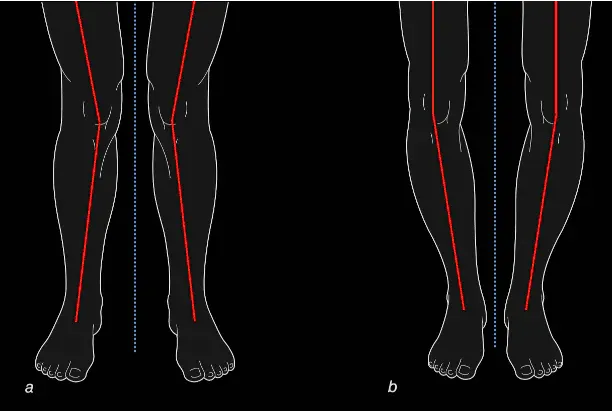
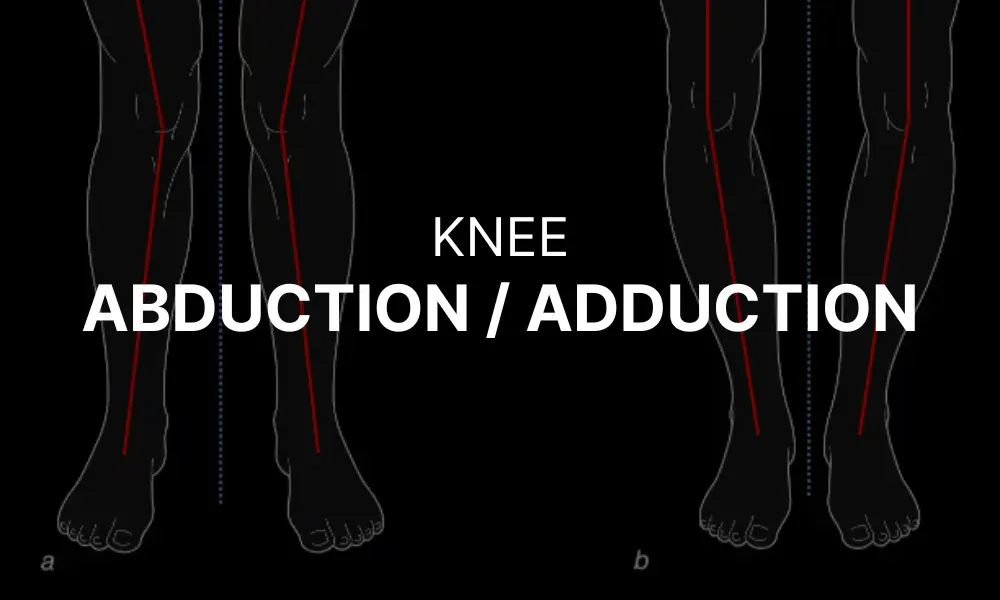
図1:(a) 膝の外転(外反膝)。(b) 膝の内転(内反膝)(Ferber and Macdonald, 2014)。
膝の外転と内転とは?
膝の外転と内転とは、前額面(体を前半分と後ろ半分に分ける垂直な面)で起こる、膝の左右方向の動きのことです。
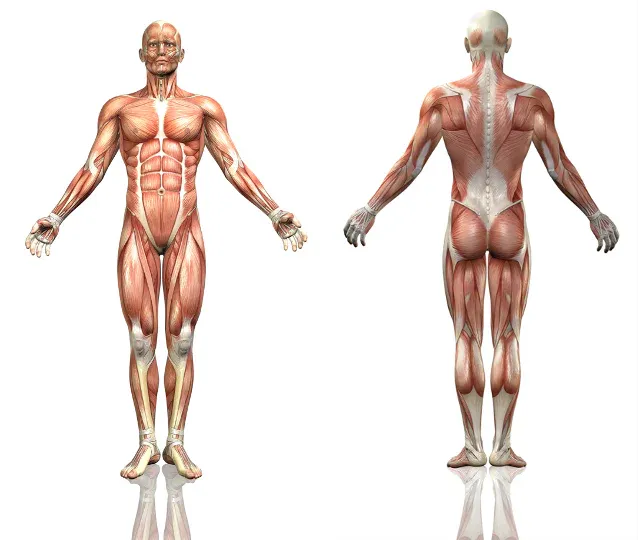
図2:前額面で見た人体。前から見た図(左)と後ろから見た図(右)。
- 膝の外転は、脛骨が体の中心線から離れる方向に動くときに起こります。膝が内側に崩れ、下腿が外側にずれます。膝の外転は、股関節の内転や足の回内を伴うことが多く、この組み合わせは外反膝、いわゆる「X脚」と呼ばれます。
- 膝の内転はその逆の動きで、脛骨が体の中心線に近づく方向に動きます(Perry & Burnfield, 2010)。膝の内転は、股関節の外転や足の回外を伴うことが多く、この組み合わせは内反膝、いわゆる「O脚」と呼ばれます。
ランニングのような動的な運動では、これらの動きは、股関節、足、足首の位置だけでなく、上半身の連動によっても左右され、膝全体の安定性とアライメントに影響します。
なぜ膝の外転・内転が重要なのか?
膝の外転と内転の角度は、下肢のバイオメカニクスとケガのリスクに影響します。
過度な膝の外転は、次のような症状と関連があるとされています。
- 膝蓋大腿部痛(PFP): 膝が内側に崩れると大腿四頭筋の力学が変わり、PFPの一因となる可能性があります(Powers, 2003; Huberti & Hayes, 1984; Elias et al., 2004)。
- 前十字靭帯(ACL)損傷: 膝の外転角度が大きく、外転にかかる負荷が高い女性アスリートは、ACL損傷のリスクが高くなります(Hewett et al., 2005)。
- 代償メカニズム: 膝の外転が大きいランナーは、増大した股関節の内転を打ち消すために、後足部の回外(回内)が小さくなることがあります。この現象は女性ランナーでより顕著です(Sakaguchi et al., 2014)。
ランニング障害との関連では、膝の外転(外反膝)がよく取り上げられますが、膝の内転(内反膝)もケガのリスクに関わっており、特に膝の外側コンパートメントに影響する症状でその傾向があります。ランニング中の膝の内転の増大は、ランナーによく見られるオーバーユースのケガである**腸脛靭帯炎(ITBS)**との関連が指摘されています(Baker et al., 2018; Noehren et al., 2014)。
これらの知見は、ランニングに関連するケガを評価するときに、膝の位置を見過ごすべきではないことを示しています。筋力トレーニング、神経筋の再教育、歩行の修正によって、過度な膝の外転や内転に対処すれば、ケガのリスクを減らし、ランニング全体のメカニクスを改善できる可能性があります。
膝の外転・内転はどうやって測定するのか?
バイオメカニクスの評価では、ランニング中の膝の外転・内転の角度を数値化できます。この分析は、次のような方法で行えます。
- ラボで:
- 3Dモーションキャプチャシステムを使う:関節の運動学を測定する際のゴールドスタンダードとされています。
- ウェアラブルセンサーを使う:慣性計測装置(IMU)が、膝の角度を動的に追跡します。
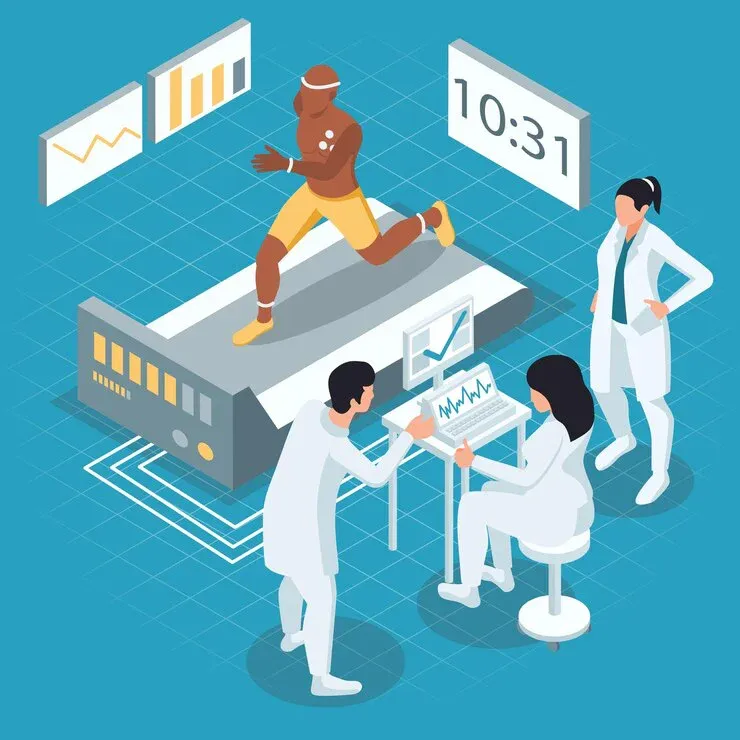
図3:バイオメカニクスラボのイラスト
- 専門家のもとで:
- 動画分析を使う:臨床医やコーチは、スローモーション映像で膝のアライメントを評価することがよくあります。
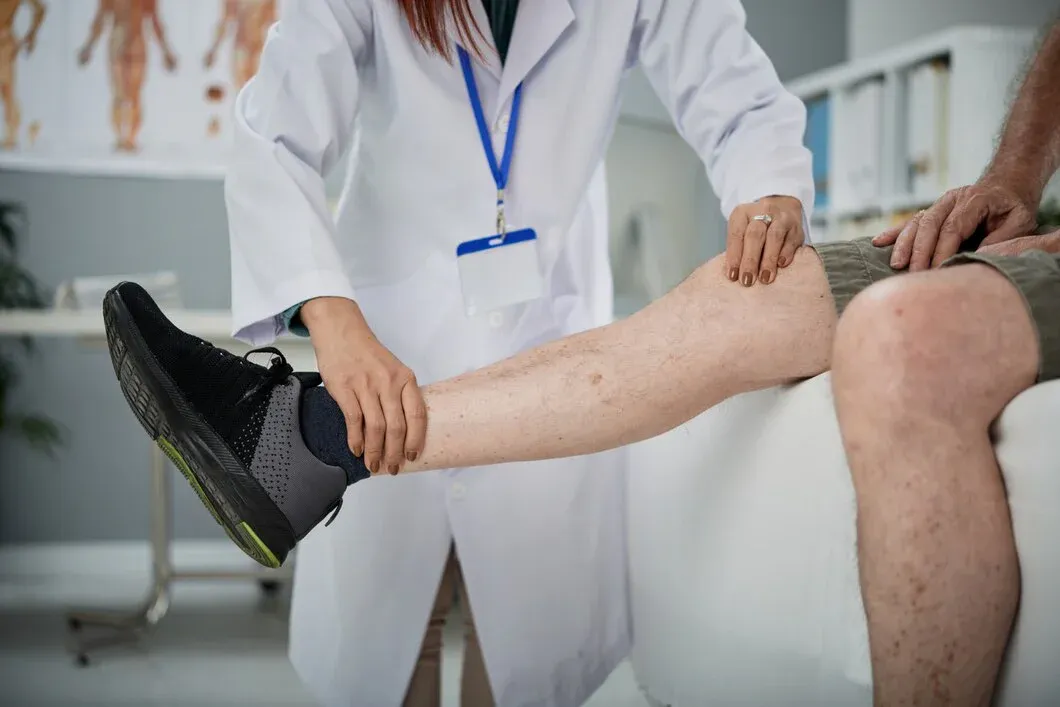
図4:臨床医の診察のイラスト
- ご自身で:
- マーカーレスの動作分析を使う:OchyのようなAIを活用した動画分析ツールなら、スマートフォンだけで、ランナーが自分の動きのパターンを把握できるバイオメカニクス分析を利用できます。詳しくはOchyのウェブサイトをご覧ください。
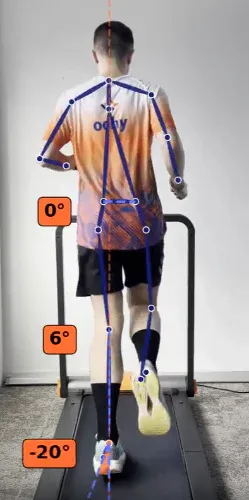
図5:Ochyのランニング分析のイラスト
ランナーはどうすれば膝のケガを予防できるか?
1. 筋力トレーニング
- 股関節と体幹の強化: 6週間の股関節強化プログラムにより、ランニング中の膝の外転モーメントが10%減少しました(Snyder et al., 2009)。
- 安定性トレーニング: 下肢のアライメントへの意識を取り入れた8週間のプログラムにより、股関節と膝の外転モーメントがそれぞれ15%と23%減少しました(Earl & Hoch, 2011)。
- 視覚、言語、触覚によるフィードバックを伴う荷重エクササイズ: 4週間の動作トレーニングプログラムにより、ランニング障害に関連する前額面での膝と股関節のメカニクスが軽減しました(Wouters et al., 2012)。トレーニング後、ランナーでは膝の外転角度のピーク値が1.8°減少しました(Wouters et al., 2012)。
こうしたエクササイズの多くは、ランニング分析に基づく筋力トレーニングを提供するOchyアプリでご覧いただけます:https://app.ochy.io/
2. ピッチの調整
- ランニングのピッチを上げると、膝の外反角度を減らせるため、簡単で効果的な対策になります(Peterson et al., 2024)。
ご自身のランニングのピッチは、Ochyアプリで提供される指標(横から見た分析)で確認できます:https://app.ochy.io/
3. 神経筋トレーニング
- プライオメトリクス(ジャンプ系エクササイズ)や神経筋ドリルは、下肢の安定性を高め、過度な膝の外転力を減らすことができます(Letafatkar et al. 2020)。
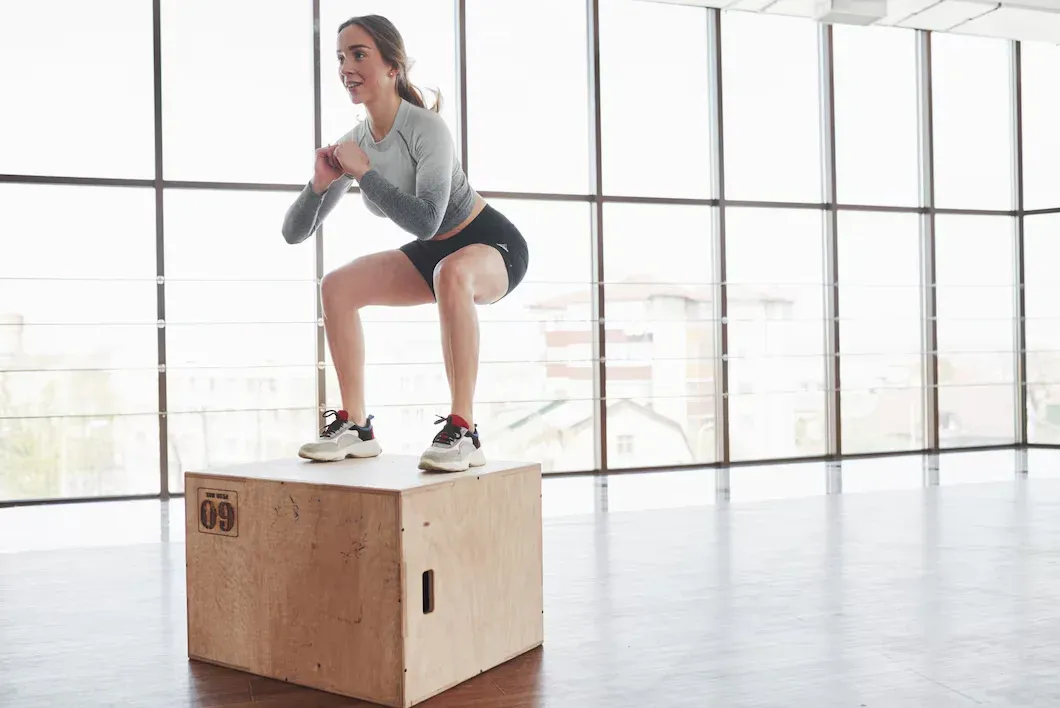
図6:プライオメトリクスのエクササイズの例。
4. ピラティスと柔軟性のトレーニング
- マットを使ったピラティスのエクササイズは、12週間後に外反膝を改善することが示されています(Gonzales & Ortiz, 2023)。
まとめ
膝の外転と内転は、ランニングのバイオメカニクスとケガのリスクにおいて重要な役割を果たします。過度な膝の外転はPFPやACL断裂などのケガと関連していますが、筋力強化とピッチの調整は、こうしたリスクを和らげる助けになります。膝のメカニクスをどう評価し、どう修正するかを理解することで、ランナーはパフォーマンスを高め、ケガの発生率を下げることができます。
ランニングフォームを手軽に分析して最適化したい方には、Ochyの利用をご検討ください。AIを活用した動画分析アプリで、ランニングのバイオメカニクス分析と、筋力強化のエクササイズを提供します。詳しくはOchyのウェブサイトをご覧ください。
参考文献
- Baker, Robert L., Richard B. Souza, Mitchell J. Rauh, Michael Fredericson, and Michael D. Rosenthal. 2018. ‘Differences in Knee and Hip Adduction and Hip Muscle Activation in Runners With and Without Iliotibial Band Syndrome’. PM & R: The Journal of Injury, Function, and Rehabilitation 10 (10): 1032–39. https://doi.org/10.1016/j.pmrj.2018.04.004.
- Earl, Jennifer E., and Anne Z. Hoch. 2011. ‘A Proximal Strengthening Program Improves Pain, Function, and Biomechanics in Women with Patellofemoral Pain Syndrome’. The American Journal of Sports Medicine 39 (1): 154–63. https://doi.org/10.1177/0363546510379967.
- Elias, John J., Jennifer A. Cech, David M. Weinstein, and Andrew J. Cosgrea. 2004. ‘Reducing the Lateral Force Acting on the Patella Does Not Consistently Decrease Patellofemoral Pressures’. The American Journal of Sports Medicine 32 (5): 1202–8. https://doi.org/10.1177/0363546503262167.
- Ferber, Reed, and Shari Macdonald. 2014. Running Mechanics and Gait Analysis. Champaign, IL: Human Kinetics. https://doi.org/10.5040/9781718209732.
- González, Jaime, and Alexis Ortiz. 2023. ‘Impact of Pilates Mat-Based Exercises on Knee Kinematics during Running’. Journal of Bodywork and Movement Therapies 33 (January):8–13. https://doi.org/10.1016/j.jbmt.2022.09.005.
- Hewett, Timothy E., Gregory D. Myer, Kevin R. Ford, Robert S. Heidt, Angelo J. Colosimo, Scott G. McLean, Antonie J. van den Bogert, Mark V. Paterno, and Paul Succop. 2005. ‘Biomechanical Measures of Neuromuscular Control and Valgus Loading of the Knee Predict Anterior Cruciate Ligament Injury Risk in Female Athletes: A Prospective Study’. The American Journal of Sports Medicine 33 (4): 492–501. https://doi.org/10.1177/0363546504269591.
- Huberti, H. H., and W. C. Hayes. 1984. ‘Patellofemoral Contact Pressures. The Influence of q-Angle and Tendofemoral Contact’. The Journal of Bone and Joint Surgery. American Volume 66 (5): 715–24.
- Letafatkar, Amir, Pouya Rabiei, and Mina Afshari. 2020. ‘Effect of Neuromuscular Training Augmented with Knee Valgus Control Instructions on Lower Limb Biomechanics of Male Runners’. Physical Therapy in Sport 43 (May):89–99. https://doi.org/10.1016/j.ptsp.2020.02.009.
- Noehren, Brian, Anne Schmitz, Ross Hempel, Carolyn Westlake, and William Black. 2014. ‘Assessment of Strength, Flexibility, and Running Mechanics in Men With Iliotibial Band Syndrome’. Journal of Orthopaedic & Sports Physical Therapy 44 (3): 217–22. https://doi.org/10.2519/jospt.2014.4991.
- Perry, Jacquelin, and Judith M. Burnfield. 2010. Gait Analysis: Normal and Pathological Function, Second Edition. 2nd ed. Thorofare: SLACK, Incorporated.
- Peterson, Jacob R., Collin R. Sanders, Nathan S. Reynolds, Conner A. Alford, Michael J. Platt, Jeffrey J. Parr, Felix Twum, James R. Burns, and David R. Dolbow. 2024. ‘Running Cadence and the Influence on Frontal Plane Knee Deviations’. Clinics and Practice 14 (6): 2491–98. https://doi.org/10.3390/clinpract14060195.
- Powers, Christopher M. 2003. ‘The Influence of Altered Lower-Extremity Kinematics on Patellofemoral Joint Dysfunction: A Theoretical Perspective’. The Journal of Orthopaedic and Sports Physical Therapy 33 (11): 639–46. https://doi.org/10.2519/jospt.2003.33.11.639.
- Sakaguchi, Masanori, Haruna Ogawa, Norifumi Shimizu, Hiroaki Kanehisa, Toshimasa Yanai, and Yasuo Kawakami. 2014. ‘Gender Differences in Hip and Ankle Joint Kinematics on Knee Abduction during Running’. European Journal of Sport Science 14 (S1): S302–9. https://doi.org/10.1080/17461391.2012.693953.
- Snyder, Kelli R., Jennifer E. Earl, Kristian M. O’Connor, and Kyle T. Ebersole. 2009. ‘Resistance Training Is Accompanied by Increases in Hip Strength and Changes in Lower Extremity Biomechanics during Running’. Clinical Biomechanics 24 (1): 26–34. https://doi.org/10.1016/j.clinbiomech.2008.09.009.
- Van Gent, R N, D Siem, M Van Middelkoop, A G Van Os, S M A Bierma-Zeinstra, and B W Koes. 2007. ‘Incidence and Determinants of Lower Extremity Running Injuries in Long Distance Runners: A Systematic Review’. British Journal of Sports Medicine 41 (8): 469–80. https://doi.org/10.1136/bjsm.2006.033548.
- Wouters, Isaac, Thomas Almonroeder, Bryan DeJarlais, Andrew Laack, John D. Willson, and Thomas W. Kernozek. 2012. ‘Effects of a Movement Training Program on Hip and Knee Joint Frontal Plane Running Mechanics’. International Journal of Sports Physical Therapy 7 (6): 637–46.