If you won a free ASICS Marathon de Paris 2027 race bib through the Cadence ballot and opted in as an ASICS One member, a free Ochy running form analysis is waiting for you. Redeem your code, film a short run with a phone, and use your results, exercises and ASICS shoe recommendation throughout your preparation.
The event stays open until race day on 4 April 2027. That date will mark the 50th edition of the ASICS Marathon de Paris, giving you time to understand how you run before your biggest training weeks arrive.
Key takeaways
- Eligible Cadence ballot winners who opted in as ASICS One members receive a code for a free Ochy running form analysis and ASICS shoe recommendation.
- You can film outdoors or on a treadmill with a phone. No lab or special sensor is required.
- Your results highlight areas to work on and connect them to exercises in the app.
- A personal best and leaderboard give you a reason to analyse again and see what changed.
- The Road to Paris event continues until the race on 4 April 2027.
From the 2026 expo to five months of marathon preparation
The 2027 program begins much earlier than the race expo. It brings running form analysis into the post-ballot journey, when runners still have time to use what they learn.
At the 2026 Paris Marathon Expo, Ochy and ASICS completed 996 gait analyses with podiatrists on site, according to our 2026 race partnership recap. It showed how useful a clear explanation of running form can be in the final days before a race.
For 2027, we moved the experience upstream. Runners can start about five months before race day, follow their preparation in the app and return to their analysis later. This changes the role of the partnership: one useful interaction at the expo becomes an ongoing reason to learn, train and check progress.
The timing matters. A 2025 guide written by a performance diagnostician recommends doing a gait analysis at the start of a running season, two to three months before a race, or before a significant increase in training volume (RunningCoach). Starting earlier gives you room to understand the results and introduce changes gradually rather than trying something new in race week.
Your Road to Paris in the Ochy app
The runner journey is designed to be simple. Eligible Cadence ballot winners begin with their Ochy code and keep the same event space through to 4 April 2027.
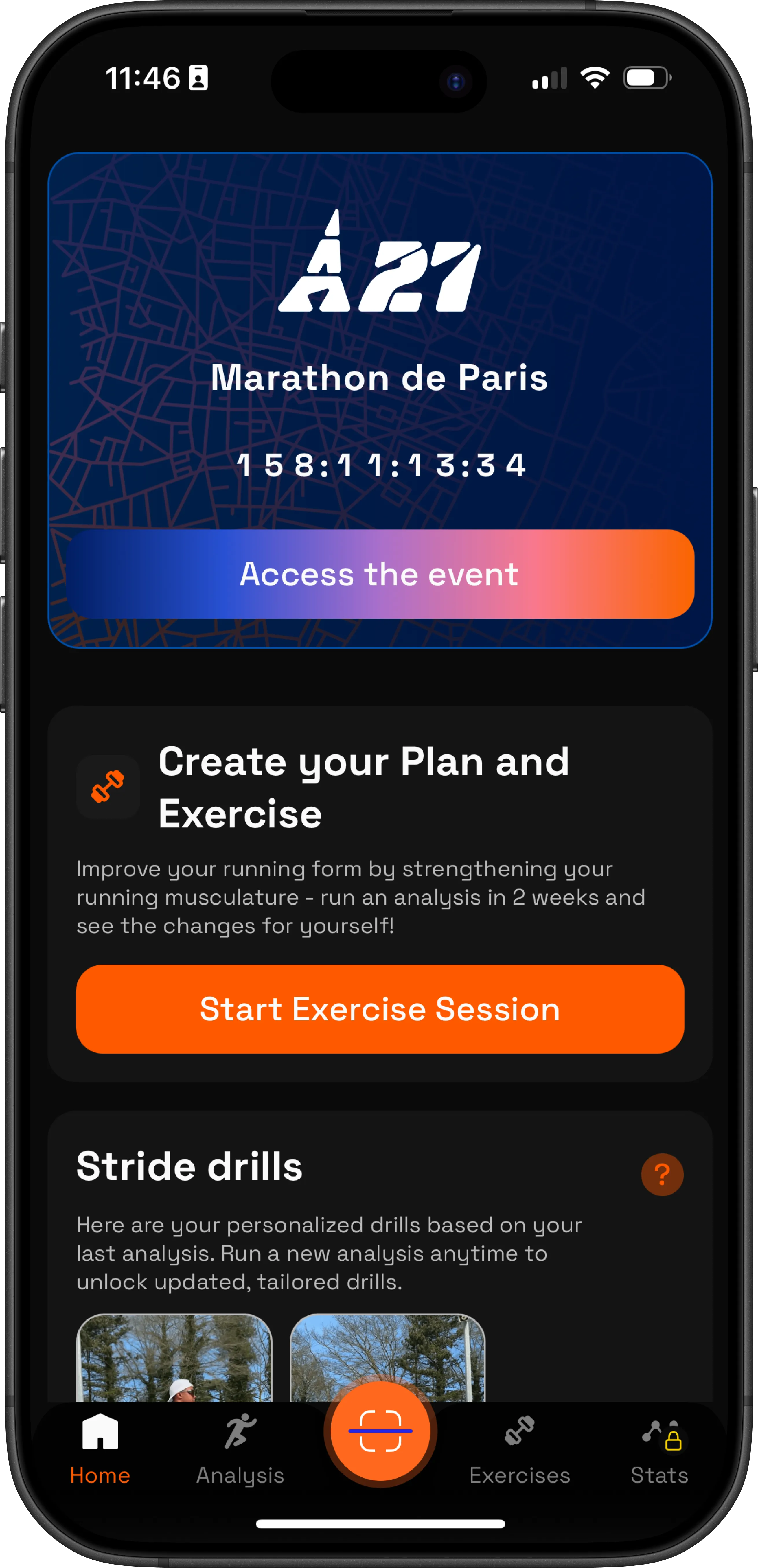
- Redeem your code and create your Ochy account. This gives you access to the free analysis and ASICS shoe recommendation.
- Open the Road to Paris event. A countdown keeps race day visible and brings the event features together.
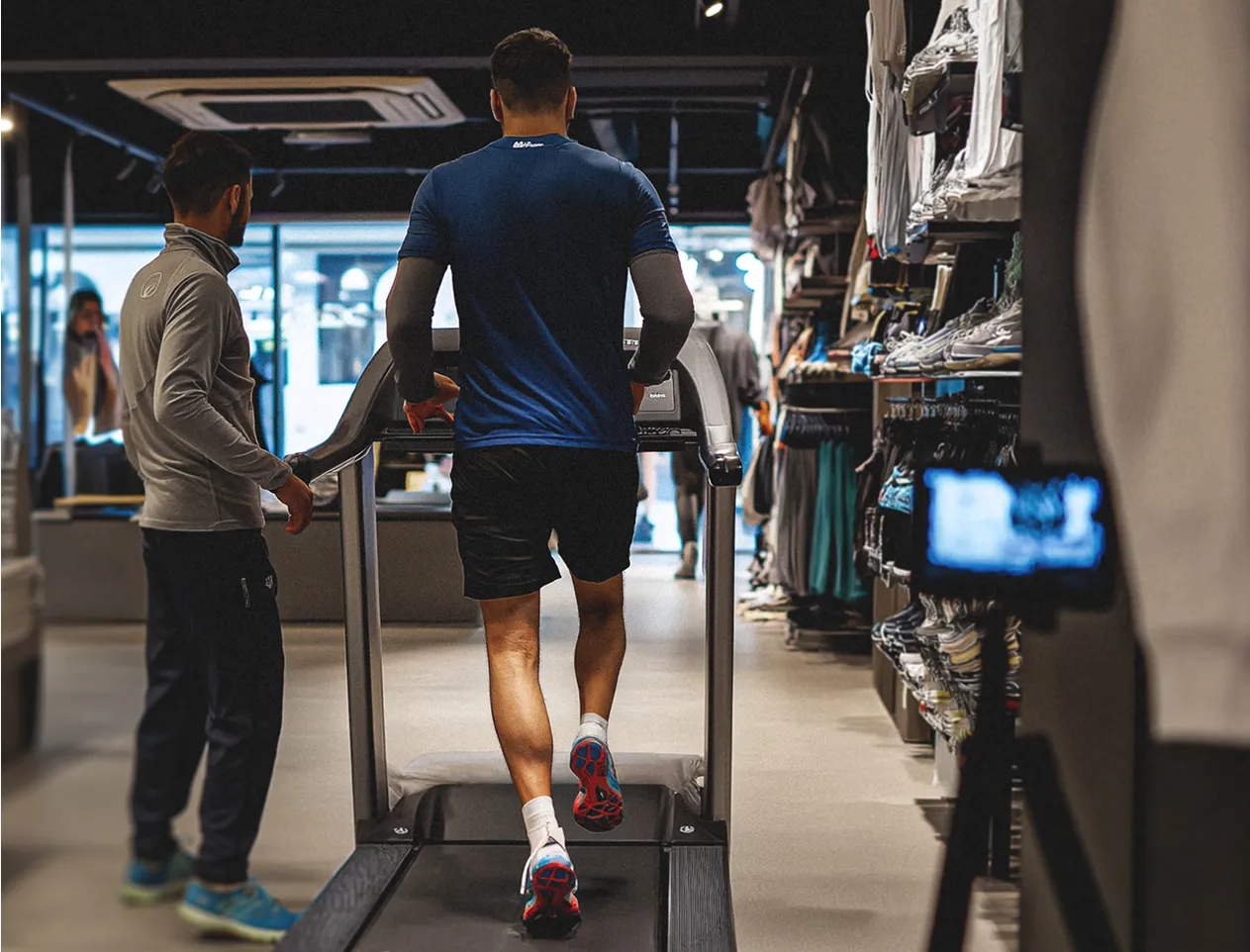
- Film a short run. Ask someone to record you from the side, from behind, or from both views. You can run outside or on a treadmill and follow the framing instructions on your phone.
- Read your running form score. The analysis shows how you move and identifies areas you can work on for your marathon goal.
- Follow your exercises. Your latest analysis guides the exercises shown in your plan. A back-view analysis can also connect your results to targeted corrective exercises.
- Analyse again later. Compare your new score with your earlier result, celebrate a personal best and see your place on the event leaderboard.
- Explore your ASICS shoe match. Your recommendation combines your running form with the answers you provide, then links to the relevant product page.
Reminders follow the rhythm of marathon preparation, from six months out to the final week, with no more than one reminder per week. They are there to bring you back to a useful next step, not to add noise to your training.
What the running form analysis shows
Your analysis is a starting point for better-informed training, not a verdict on whether your form is good or bad. There is no single perfect way to run. As Hospital for Special Surgery explains, the aim is to run well within your own frame (HSS).
The side and back views show different parts of your movement. Depending on the view, your results can help you understand areas such as posture, foot landing, cadence, pelvic movement and knee alignment. The app then turns those observations into clear areas to work on.
That does not mean changing everything at once. Choose the exercises linked to your latest result, add them consistently to your plan and give your body time to adapt. Our guide to back-view analysis and personalised corrective exercises explains how the app connects rear-view findings to practical work.
Small changes can affect joint mechanics, but they should remain individual. In a study of 45 healthy recreational runners at a constant treadmill speed, increasing step rate by 5% reduced knee energy absorption by about 20%; a 10% increase reduced it by about 34% and also reduced energy absorption at the hip (Heiderscheit et al., 2011). This does not make a cadence increase the right answer for everyone. It shows why a measured, gradual change is more useful than chasing a universal number.
Ochy does not diagnose or treat injuries, and no analysis can promise an injury-free marathon. If you are in pain, stop and speak with a qualified health professional.
Why the score, personal best and leaderboard matter
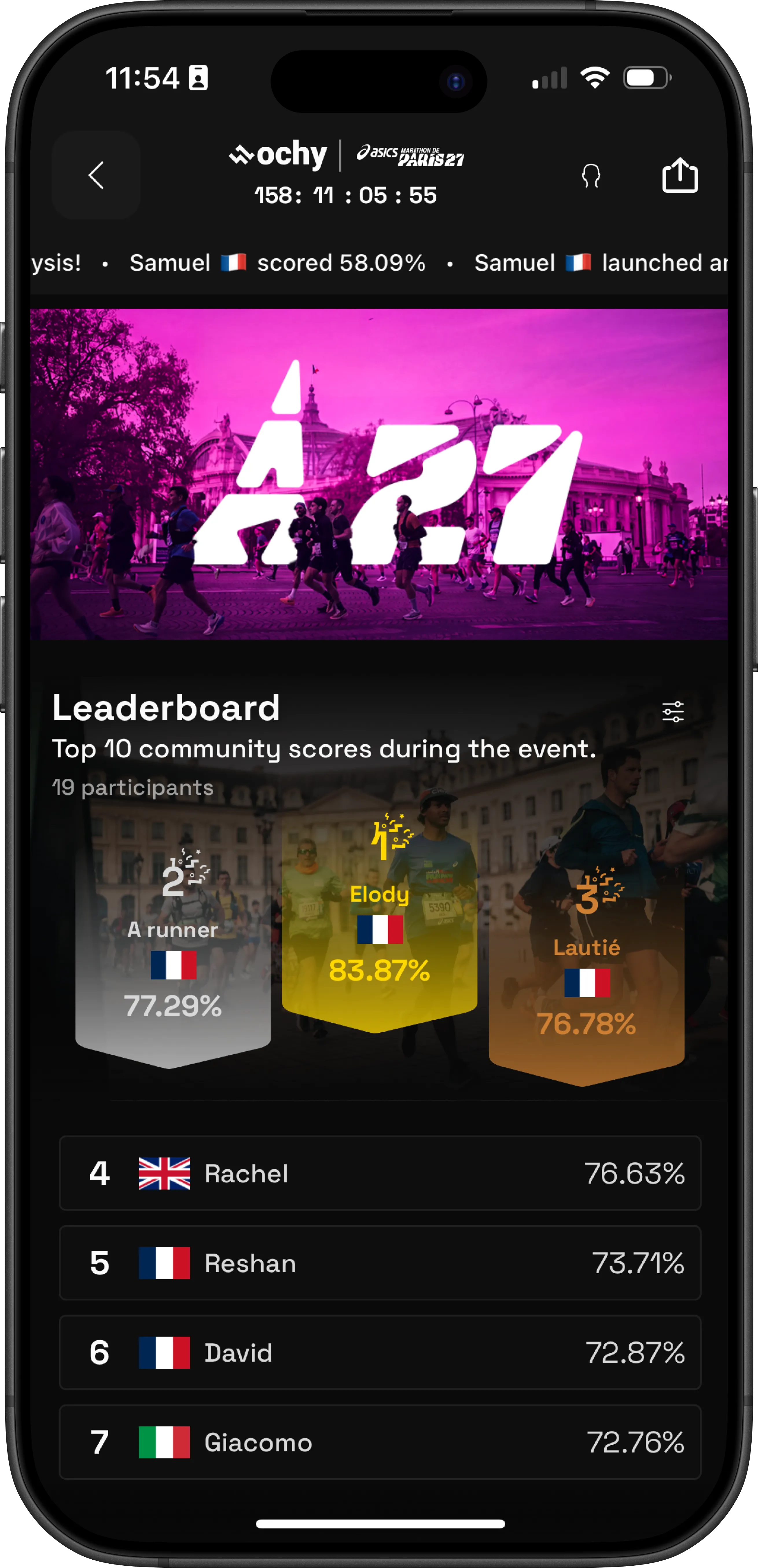
The score and leaderboard are prompts to check your form again, not goals to chase at the expense of healthy training. A higher score only becomes meaningful when it reflects a change you can understand and sustain.
When you film again, your new analysis can show whether the areas you worked on changed as your mileage increased. If you set a new best score, the app marks the moment. The event also includes separate top-10 leaderboards for side and back views, organised by gender.
The leaderboard should stay in perspective. Running form is personal, and another runner's score is not a training prescription for you. The most useful comparison is between your own analyses: what the first one showed, what you worked on and what your next recording shows.
An ASICS shoe recommendation matched to how you run
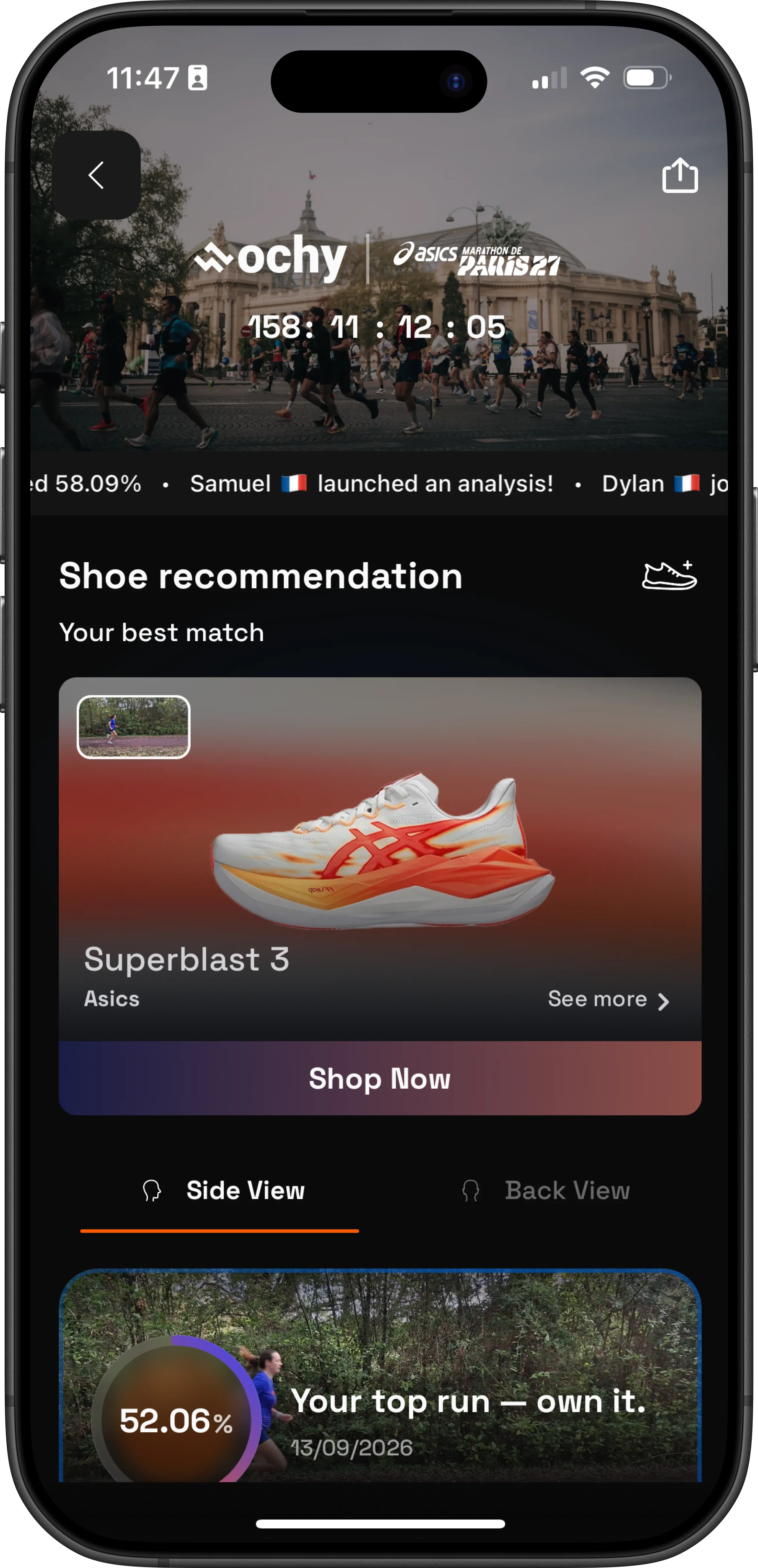
Choosing a marathon shoe should start with you, not with a generic best-shoe list. In the Road to Paris event, Ochy matches information from your running form analysis and your answers with a shoe from the ASICS range.
Your result shows the suggested shoe and links to its product page on asics.com.
The recommendation supports product discovery; it does not replace comfort, fit or a gradual transition into a new pair. Use it to narrow the choice, then make sure the shoe feels right and test it during training before race day.
What this partnership means for brands and race organisers
The Road to Paris program shows how a race partnership can support runners for months instead of concentrating every interaction at the expo. Each part of the journey has a clear purpose: the analysis teaches the runner something, the exercises create a next step, the second recording checks progress and the shoe recommendation connects that insight to a relevant product.
For ASICS, this creates a measurable path from the Cadence ballot journey to product discovery on asics.com. For the runner, the recommendation has context because it follows an analysis of how they run.
The program is measured through code redemptions, event participation, completed analyses, repeat analyses, shoe recommendations and visits to the ASICS store. Those figures will continue to change while the event is live and must be dated when reported. The more important test is whether runners return for a useful reason: to see whether their work changed anything before race day.
Brands and race organisers looking for a longer runner relationship can explore Ochy for Business.
Start your first analysis
If you won a free ASICS Marathon de Paris 2027 race bib through the Cadence ballot, opted in as an ASICS One member and received an Ochy code, use it now rather than waiting until race week:
- Go to the Ochy and ASICS redemption page.
- Enter your code and create your account.
- Open Road to Paris in the Ochy app.
- Ask someone to film your first run.
- Review your areas to work on and begin the exercises linked to your analysis.
Your first score is not the finish line. It is a reference point for the months ahead, so you can understand your stride, make considered changes and arrive on 4 April 2027 knowing more about how you run.